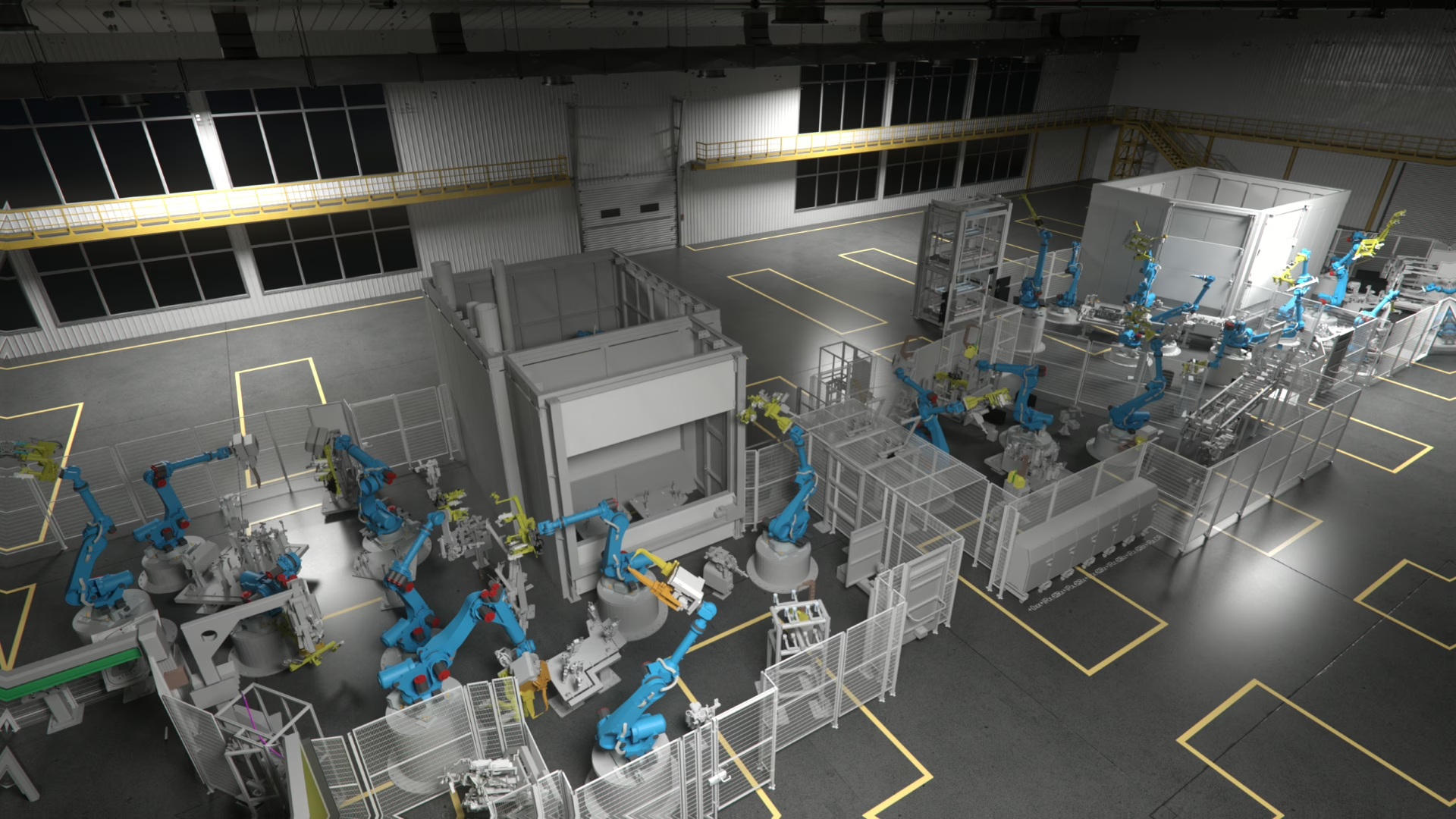
Virtual commissioning (VC) is the simulation-based validation of automation systems before they are deployed in the real environment. It allows testing of PLC logic, robot programs, and system behavior using a digital twin of the production system.
Digital Twin Environment
What this means in practice:
Schnellere Inbetriebnahme
Validate automation logic before deployment and reduce time on-site significantly.
Early Error Detection
Identify logic issues, collisions, and interlocks long before real hardware is involved.
Iterate Without Risk
Test changes instantly without impacting production systems or schedules.
Minimierte Stillstandszeiten
Minimize unexpected issues during ramp-up and ensure a smoother start of production.
Toolchain
From the real plant to a validated virtual workflow.
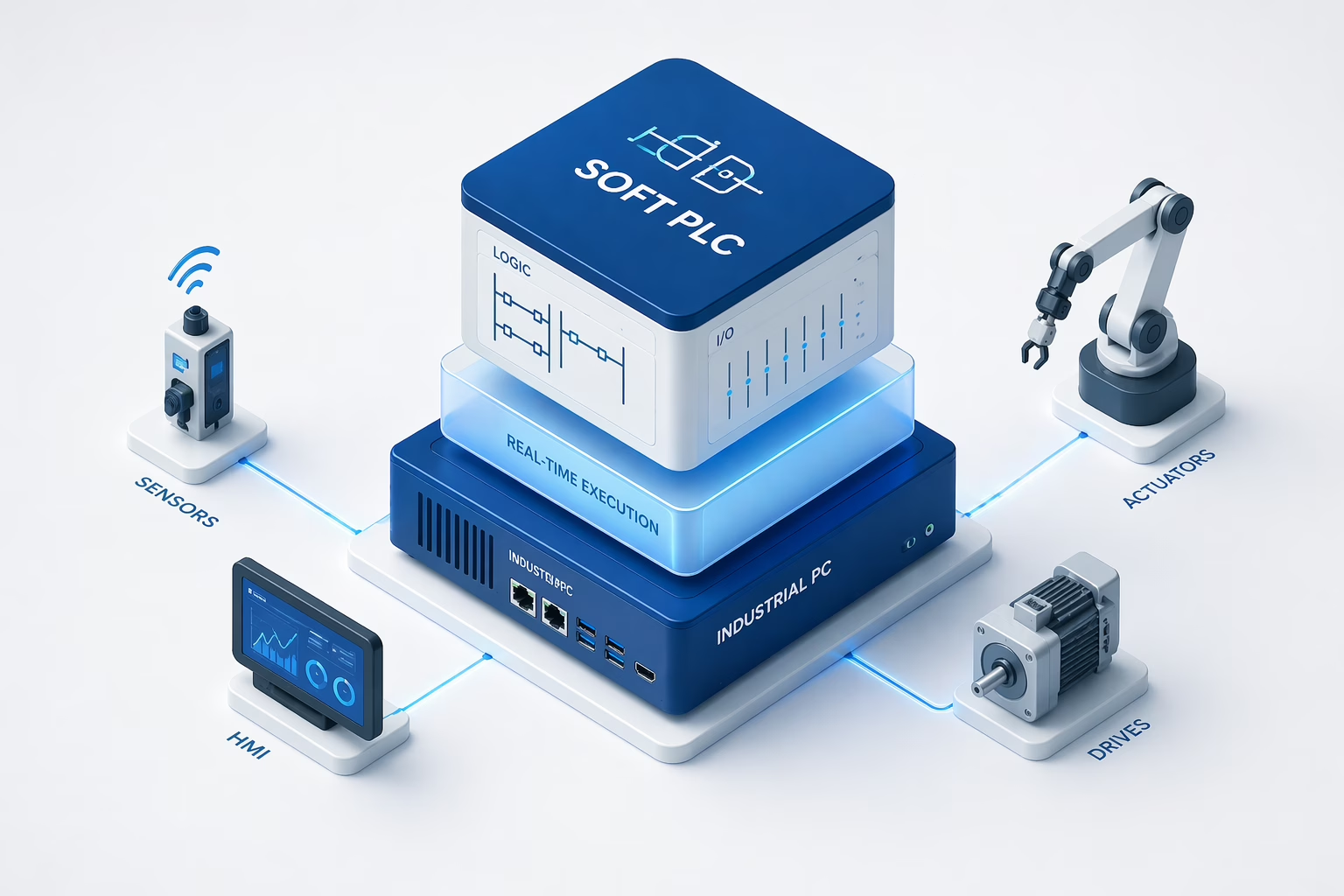
This section shows how real controls and a soft PLC connect with a virtual production
environment and how RF::SUITE tools support robot control, electrical behavior, and
mechanical validation.
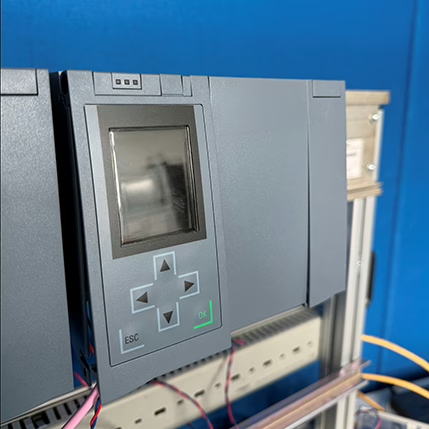
Real PLC
Soft PLC
Video
See the virtual model
before the real startup.
Virtual Commissioning Showcase
Warum Virtual
Commissioning?
Virtual commissioning creates transparency early on, reduces risks, and makes real production startup more predictable, efficient, and independent of the physical system.
Detect errors early
Minimize risks
Shorten real commissioning
Test functions earlier
Virtual Commissioning IMpact
More predictable
Coordination between client and contractor becomes more structured and happens earlier.
Higher quality
The quality of software, processes, and commissioning increases through early validation.
More Efficient
Time, cost, and resources are reduced because issues become visible before physical startup.
Safer
Faults, exception cases, and critical test scenarios can be validated without production risk.
Use Cases
Where Virtual Commissioning creates the most value.
Virtual Commissioning is especially effective in projects where multiple systems,
interfaces, and commissioning dependencies create high risk during startup.
Robotic production cells
Validate robot interaction, handshakes, sequences, and exception handling before real hardware is fully available.
Assembly and manufacturing lines
Simulate complete line behavior, timing, and communication across stations to reduce risk during ramp-up.
Special machinery
Test individual machine logic, sequences, and edge cases early when unique engineering solutions are involved.
Brownfield upgrades
Check changes in logic and interfaces before touching existing production systems with limited downtime windows.
Start Your Project
Bring virtual commissioning into your real project workflow.
Discuss your use case, validate your automation logic earlier, and reduce surprises before physical startup begins.
Wir verwenden Cookies und andere Tracking-Technologien, um Ihr Nutzungserlebnis auf unserer Website zu verbessern, personalisierte Inhalte und gezielte Werbung anzuzeigen, den Website-Traffic zu analysieren und zu verstehen, woher unsere Besucher kommen.
Funktional
Immer aktiv
Diese Cookies werden verwendet, um Ihnen ein personalisierteres Nutzungserlebnis auf unserer Website zu bieten und sich an Ihre Einstellungen zu erinnern, die Sie bei der Nutzung unserer Website treffen.
Einstellungen
Die technische Speicherung oder der Zugriff ist für den legitimen Zweck erforderlich, Präferenzen zu speichern, die nicht vom Abonnenten oder Benutzer angefordert wurden.
Statistiken
Diese Cookies werden verwendet, um Werbung anzuzeigen, die basierend auf Ihrem Surfverhalten wahrscheinlich für Sie von Interesse ist.Die technische Speicherung oder der Zugriff, der ausschließlich zu anonymen statistischen Zwecken verwendet wird. Ohne eine Vorladung, die freiwillige Zustimmung Ihres Internetdienstanbieters oder zusätzliche Aufzeichnungen Dritter können die zu diesem Zweck gespeicherten oder abgerufenen Informationen in der Regel nicht dazu verwendet werden, Sie zu identifizieren.
Marketing
Die technische Speicherung oder der Zugriff ist erforderlich, um Nutzerprofile zu erstellen, Werbung zu versenden oder den Nutzer auf einer Website oder über mehrere Websites hinweg zu ähnlichen Marketingzwecken zu verfolgen.